Back Pain · September 22, 2026 · Dr. Michelle Herczeg
Chiropractic Adjustment vs. Massage for Muscle Tightness in Severna Park, MD?
Quick answer
Massage therapy works at the soft tissue level, while chiropractic adjustments work at the joint and nervous system level. If a joint restriction is the root cause of your tightness, massage provides temporary comfort but does not fix the underlying problem — for most patients with chronic tightness, both are most effective when combined.
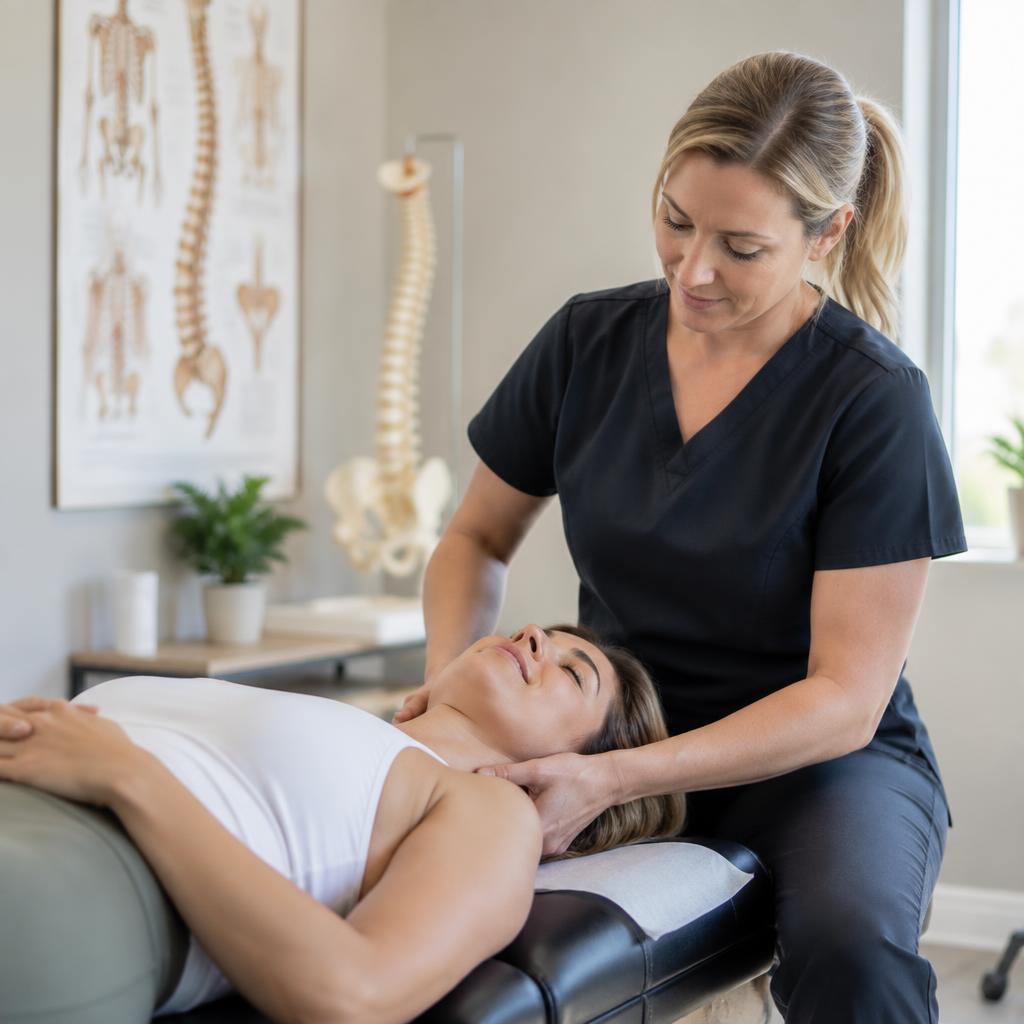
When choosing between a chiropractic adjustment and massage for muscle tightness in Severna Park, MD, the answer comes down to the source of the tightness. Massage therapy works at the soft tissue level, breaking down adhesions, releasing trigger points, and improving circulation in muscle and fascia. Chiropractic adjustments work at the joint and nervous system level, restoring restricted joint motion and reducing the neural drive to guarding muscles. If a joint restriction is the root cause of your tightness, massage provides temporary comfort but does not fix the underlying problem. If soft tissue adhesions are the primary issue, chiropractic alone may not fully address it. For most patients with chronic tightness, both are most effective when combined, and a chiropractic evaluation is the best starting point for identifying which driver is at work.
How Does Chiropractic Adjustment Relieve Muscle Tightness?
Chiropractic spinal manipulation restores mobility to restricted joints. When a facet joint becomes fixated, due to poor posture, injury, or chronic loading, the nervous system responds by increasing protective muscle tone in the surrounding area. This is the neurological basis of most spinal muscle guarding. A chiropractic adjustment stimulates mechanoreceptors in the joint capsule, sending inhibitory signals to the spinal cord that reduce this protective contraction. The result is an often immediate, measurable reduction in muscle tone around the adjusted segment. Over a course of care, repeated adjustments retrain the nervous system to maintain this reduced guarding state.
How Does Massage Therapy Relieve Muscle Tightness?
Massage therapy acts directly on muscle fibers, fascia, and connective tissue. Through varying degrees of pressure and specific techniques, including Swedish, deep tissue, and myofascial release, massage physically deforms and lengthens shortened soft tissue, disrupts myofascial trigger points, improves local blood and lymphatic flow, and activates the parasympathetic nervous system to reduce overall stress-related tension. Massage is particularly effective for tension that has accumulated through overuse, postural stress, or prolonged emotional strain, where soft tissue changes are the primary driver of symptoms.
What Conditions Respond Better to Chiropractic Than Massage?
Chiropractic care tends to produce superior outcomes for tightness associated with restricted spinal joints, nerve-related pain patterns such as sciatica or cervical radiculopathy, tightness that is region-specific and follows a dermatomal distribution, postural dysfunction with visible spinal misalignment, and cases where low back pain or neck pain is the primary complaint. If your tightness is worst in the morning, improves with movement, and is associated with stiffness in a specific spinal region, joint dysfunction is the likely driver and chiropractic is the appropriate primary intervention.
What Conditions Respond Better to Massage Than Chiropractic?
Massage therapy is often more appropriate as the primary intervention when tightness is diffuse, stress-related, or muscular in origin without joint-specific findings. Post-exercise soreness, tension headaches driven by cervicogenic muscle tension, myofascial pain syndrome, and fibromyalgia-related tightness often respond well to massage. If your tightness presents as generalized aching rather than localized joint stiffness, or if you have no history of injury or spinal complaints, soft tissue therapy may address your needs more directly.
Why Are Chiropractic and Massage More Effective Together?
The combination of chiropractic adjustment and massage is particularly powerful because the two modalities address complementary tissue systems. When massage is performed before an adjustment, the surrounding muscles are pre-relaxed, allowing joint corrections to be more comfortable, deeper, and longer-lasting. When massage follows an adjustment, it can address any residual soft tissue tension that persists after the joint is mobilized. Research supports integrated manual therapy approaches, and many patients who struggle to hold their adjustments find that adding regular massage dramatically improves the durability of chiropractic corrections.
How Do You Choose Between Chiropractic and Massage in Severna Park, MD?
If you are uncertain whether your muscle tightness requires chiropractic care, massage, or both, the most efficient path is a comprehensive chiropractic evaluation. During your first visit, your chiropractor will differentiate joint-mediated from soft tissue sources of tightness and recommend the appropriate course of action. Many chiropractors in Severna Park, MD incorporate both joint manipulation and soft tissue techniques into a single treatment session, providing integrated care without requiring two separate appointments. Request an appointment to get a personalized recommendation based on your specific presentation.
Long-Term Management of Muscle Tightness: What Actually Works?
Managing chronic muscle tightness long-term requires addressing both the mechanical and neuromuscular components simultaneously. Regular chiropractic care maintains joint mobility and prevents accumulation of joint-driven guarding. Complementary strategies such as consistent stretching, strength training for postural muscles, stress management, and adequate sleep hygiene each reduce the overall load on the muscular system. Patients who combine professional care with wellness and lifestyle strategies consistently achieve faster improvement and significantly longer periods between pain episodes than those who rely on passive treatment alone.
Care related to this article
People also ask
Which is better for muscle tightness, chiropractic or massage?
Neither is universally better; they target different tissue systems and work best together. Massage therapy directly addresses soft tissue, breaking down adhesions, improving circulation, and reducing myofascial trigger points. Chiropractic care addresses the underlying joint dysfunction that often drives chronic muscle guarding. For many patients with persistent tightness, combining both modalities produces faster, more durable results than either alone. The best starting point depends on the primary cause of your tightness: if joint restriction is the main driver, start with chiropractic care; if soft tissue adhesions are the primary issue, massage may take priority.
Can chiropractic adjustments release tight muscles?
Yes. Chiropractic adjustments influence muscle tone through the nervous system. When a restricted spinal joint is mobilized, mechanoreceptors in the joint capsule send proprioceptive signals to the spinal cord that inhibit the protective muscle guarding response surrounding that joint. Many patients notice an immediate reduction in perceived tightness following an adjustment. However, deeply entrenched chronic muscle tension typically requires multiple adjustments to fully normalize, as the neuromuscular patterns underlying the tightness take time to rewire.
When should I choose massage over chiropractic for tight muscles?
Massage is often the better first choice when muscle tightness is primarily soft tissue in origin, such as post-exercise soreness, overuse-related trigger points, stress-induced tension in the neck and shoulders, or myofascial restrictions without accompanying joint dysfunction. If your tightness is diffuse, superficial, and not associated with specific pain patterns or limited range of motion that suggest joint involvement, massage can provide significant and relatively immediate relief without requiring spinal manipulation.
Is it safe to get a chiropractic adjustment and massage on the same day?
Generally, yes, receiving massage before a chiropractic adjustment on the same day is a widely used and often recommended sequence. Pre-adjustment massage softens the muscles surrounding the target joints, making the adjustment more comfortable and allowing joint corrections to hold more easily. Some practitioners also recommend massage after an adjustment to address any residual muscle tension. The specific timing and sequence should be guided by your chiropractor based on your individual presentation and the techniques being used.
Does massage fix joint misalignments like chiropractic does?
No. Massage therapy is highly effective for soft tissue, it cannot directly mobilize restricted facet joints, restore lost joint motion, or address the neurological consequences of vertebral subluxation. If your tightness stems from a joint restriction that is creating abnormal nerve signaling to surrounding muscles, massage will provide temporary relief but will not resolve the underlying cause. Chiropractic adjustment is specifically designed to address this joint-level dysfunction, which is why many patients who receive only massage for spine-related tightness experience recurrent tension.
How do I know if my tight muscles are from a joint problem or a soft tissue problem?
A chiropractic or physical medicine evaluation can differentiate between joint-mediated and soft tissue sources of muscle tightness. Joint dysfunction typically produces tightness that is regional, follows a specific spinal distribution, and is associated with reduced range of motion and joint tenderness on palpation. Soft tissue problems, such as trigger points or fascia restrictions, tend to produce more localized or referred tenderness without joint-specific findings. In practice, both components often coexist, which is why a comprehensive intake examination is the most reliable way to determine the primary driver of your symptoms.
Can I see a chiropractor in Severna Park, MD for both joint and muscle issues?
Absolutely. Chiropractic care in Severna Park, MD addresses both the joint mechanics and the neuromuscular consequences of spinal dysfunction. Many chiropractors incorporate soft tissue techniques, such as myofascial release, instrument-assisted soft tissue mobilization, or trigger point therapy, alongside spinal adjustment to address the full clinical picture. During your initial consultation, your chiropractor will assess both joint and soft tissue components and recommend the combination of interventions most appropriate for your specific presentation.
Continue reading: Back Pain
Pillar guide
Back Pain in Severna Park: A Complete Guide to Causes, Relief, and Chiropractic Care
Related article
Why Are My Muscles Still Tight After a Chiropractic Adjustment in Severna Park, MD?
Related article
Can a Chiropractor Help With Muscle Knots and Tight Muscles in Severna Park, MD?
Related article
Chiropractic Adjustment vs. Massage Therapy for Back Pain in Severna Park, Maryland